


Get ready, Lawrence. A show for the ages is coming through.
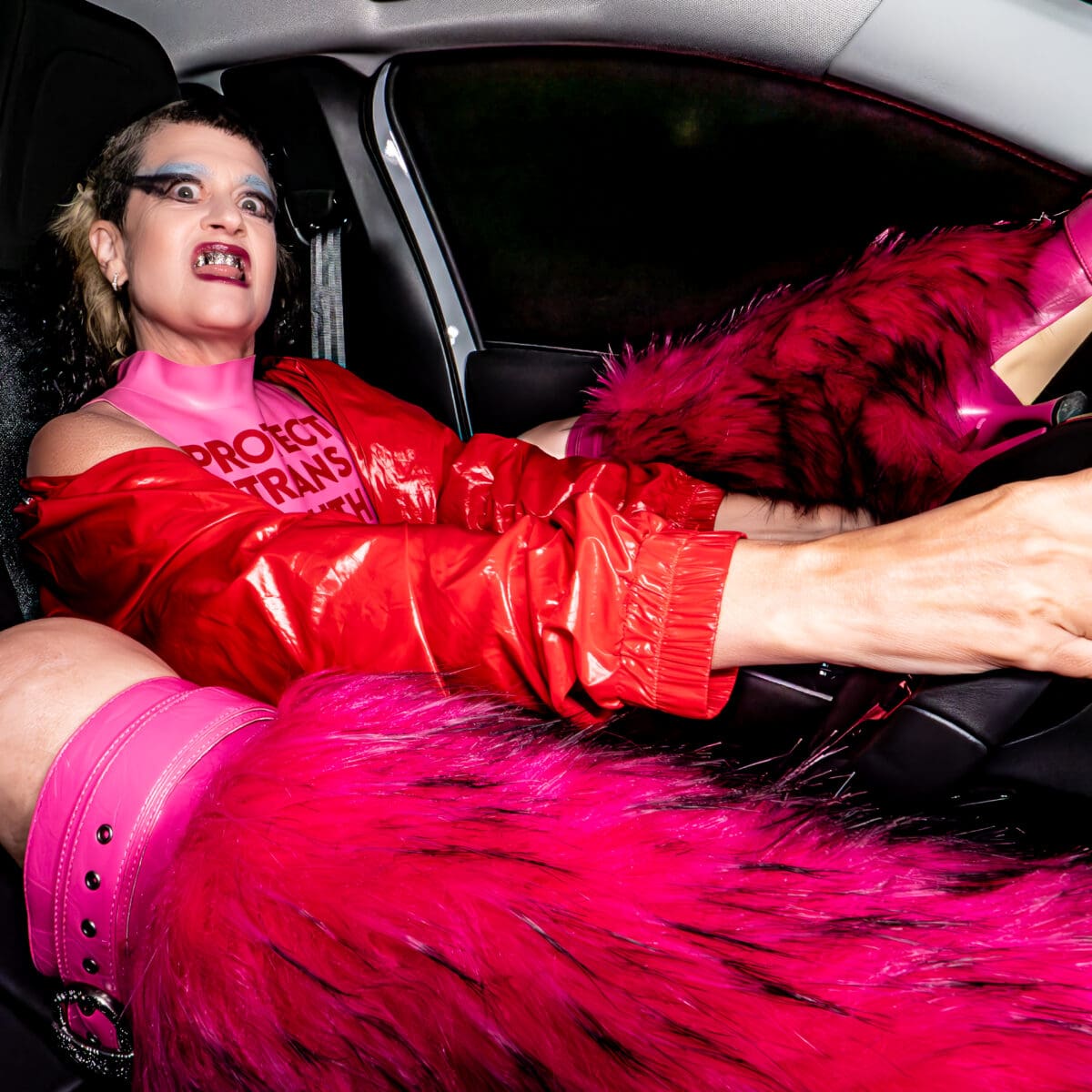
When queer feminist icon Peaches stops by Lawrence on Thursday, the show will be a delight for your ears and your eyes. That’s because the electro clash musician is a performer in every sense. Wild and provocative costumes, stage antics, audience interaction, and endless dancing are to be expected. Hot off her recent release No Lube So Rude (shortlisted for the Polaris Music Prize), the artist is bringing the big gay party to Kansas right at the time that we needed it.
Trans folks in Kansas have had a hell of a year with anti-trans laws (including a sure-to-be-overturned bathroom bill and having their driver’s licenses nullified with very little notice). Luckily, Peaches is here to the rescue. The artist, also known as Merrill Nisker, is stopping by a host of cities she’s never been to in the United States in hopes of bringing a message of positivity and meeting queer audiences in underrepresented parts of the country. “I haven’t been to most of the places around where I’m going,” she says. “I wouldn’t know about especially in Lawrence, Kansas, or Kentucky where I’m going, or Oklahoma City, Arkansas… I’ve never played any of these places, and I’m sure it’s going to unearth hopefully, bring the power to the LGBTQ community.”
Though Nisker has been to Lawrence once before during an unscheduled stop off her tour (she places it about 2004). That’s when she teamed up with another regional electro-clash legend, SSION, the brainchild of Cody Critcheloe. “Cody’s band, who does more professional music videos and films like that. They made the cover for the Yeah Yeah Yeahs 2003 Fever to Tell album, and they were making these videos with strong women. They made a video about how they were birthed from Kathleen Hanna, Madonna, and Courtney Love,” she says. “They also sent me drawings of me with all these ferocious dogs, they were really cool. They were from Kentucky originally, but they were in Lawrence, Kansas, and they had their band, and I had them open for me, so I came to Lawrence to have them open so we could play together.”
Nisker is no stranger to exploring new ideas. Though her 7th album No Lube So Rude is the first full album she’s released in a decade, she’s also been active in the arts scene exploring visual performance methods and working with animatronics (she referred to it as being like “It’s a small world” but a club scene). “I’ve had opportunities to make larger versions of my shows with musicians, strings, horns, drummers, and things like that. I worked with a dance collective that we developed called ‘Clusterfuck’ where we just sculpture how to be one body, be sculptural but move together.” Nisker likes it when concert productions go big, and wants to see more artists taking risks. “I don’t know if you’ve ever noticed, but in like huge concerts, like big productions are going insane. I just head about the Metallica concert where they have five drum kits all over. No one’s just on the stage anymore, they have all these catwalks and the audience is around,” she says, recalling all her favorite big production moments she’s seen in live music. “It’s just like, the productions are going insane, which I think is good because if you have that money and you can do it, good, please don’t just stand there. My favorite is Cyndi Lauper went across the audience in a garbage can.”
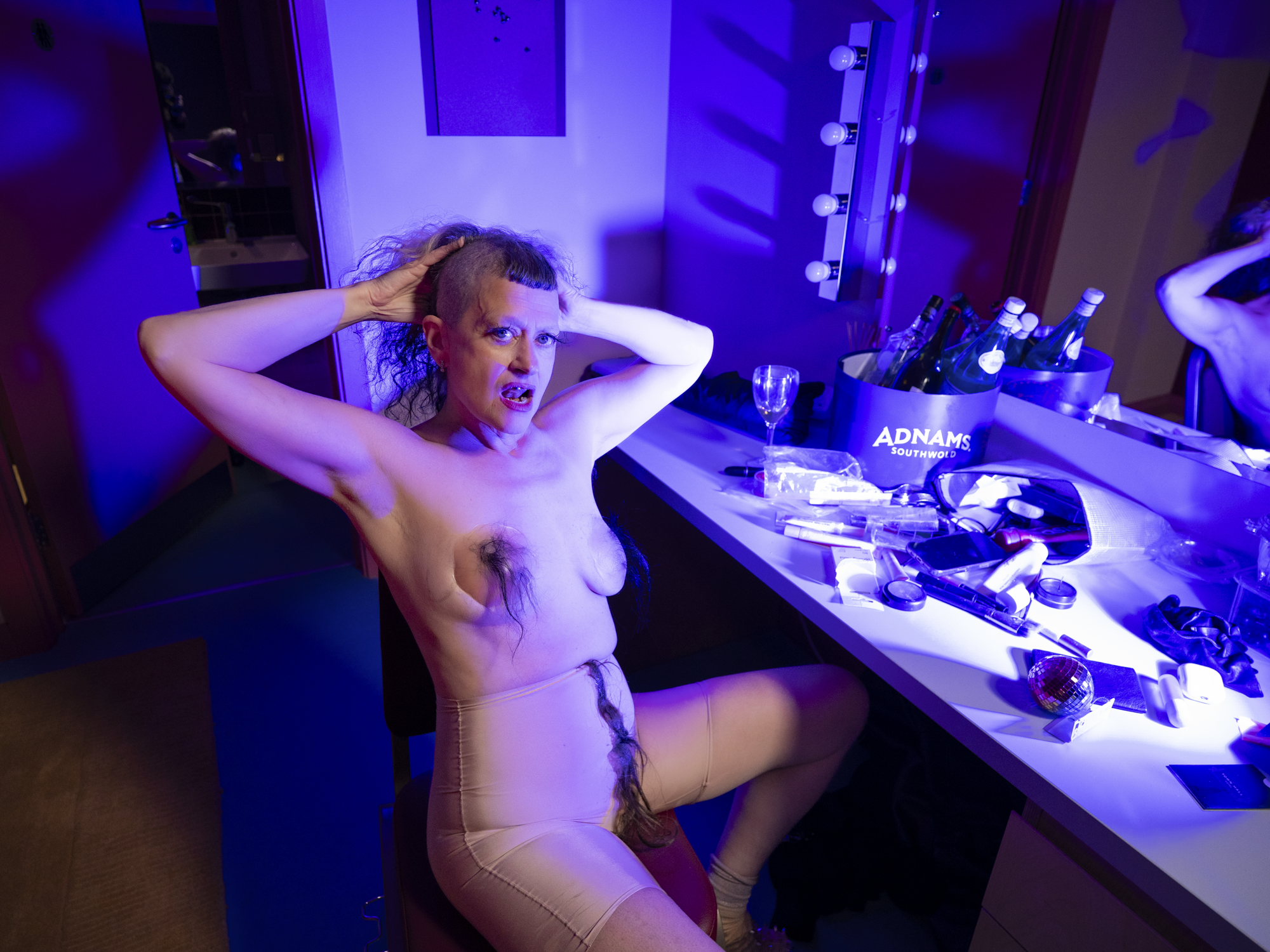
When Nisker hits that Liberty Hall stage, don’t expect her to stand still. She won’t be limiting her movements to the stage alone, and there’s a good chance the infectious energy will reach every corner of the venue. No Lube So Rude is not only a highly danceable record, but it’s an album full of sincere themes disguised as songs about bodily fluids. “The themes are breaking open the idea that reality is more absurd than fiction. I always work on bodily autonomy, in terms that I use a lot of imagery with genitalia and different parts of the body. So this time, the theme is prolapse. Going in and coming out from all ends. There’s no way to shove it back in, if you know what I mean. Let’s let it all out and deal with it and love it and make it colorful and make it fun,” she says, calling her live shows “consensually interactive.” “It’s like, there’s no turning back for me. We have, especially in America, so many laws that are trying to push back, and I’m pushing pushing pushing so much forward that I’m prolapsing.”
Nisker also notes that the types of self expression she works with are needed now more than ever in today’s political climate. “From my global view, everything is becoming more leaning to white supremacy and a big push to crush everything, a last chance to be the patriarchy rule,” she says. “I feel like my generation, generations before me, they have a connection to coming together as a community or working together and coming to see punk shows or coming to see live shows, and I think that younger generations with more isolated experiences, it’s more uncomfortable in general. So if you think about when we were young and we thought ‘Oh, our parents are not cool, they don’t know,’ it’s kind of like the parents are more cool. They understand that, and it’s important to give that wisdom.”
While Nisker, who will turn 60 this year, is navigating aging as an artist, she is seeing all the generations connecting at her shows. “It’s very important in my world that there’s intergenerational conversations,” she says. “That’s something that’s really special about my shows. You’ll see young people and you’ll see old people and you’ll see middle aged people. I just think it’s great that they all come together. Maybe they’re like ‘Oh, what’s this young person doing here? What’s this old person doing here?’ And by the middle of the show, they’re like ‘Oh, it’s because we’re all into this.’ My music has that ability to draw from young and old.”
For now, she wants fans to come to the show and feel like they can be themselves. “Don’t be afraid, it’s a really fun show. It’s really transformative. It’s super fun and it can be super emotional, but it can also be a really good time, believe me there is nothing scary about it.”